It’s been a week since the “Light Infantry” tactical shooting competition, so it’s a good time to wrap things up. I waited a bit to get some distance, especially since discussions about the results were still going on throughout the week and a mix of emotions was grinding inside me (until the official results come out, I’ll just say that we made it to the podium – very close, alongside two really strong teams).
As usual, I’ll serve you a loose collection of information, observations, and conclusions which, I hope, will form a complete picture of the event as well as describe our performance. Oh, and I hope you’ve got plenty of time, because this will be a long one – after all, the competition itself wasn’t short either.
1.
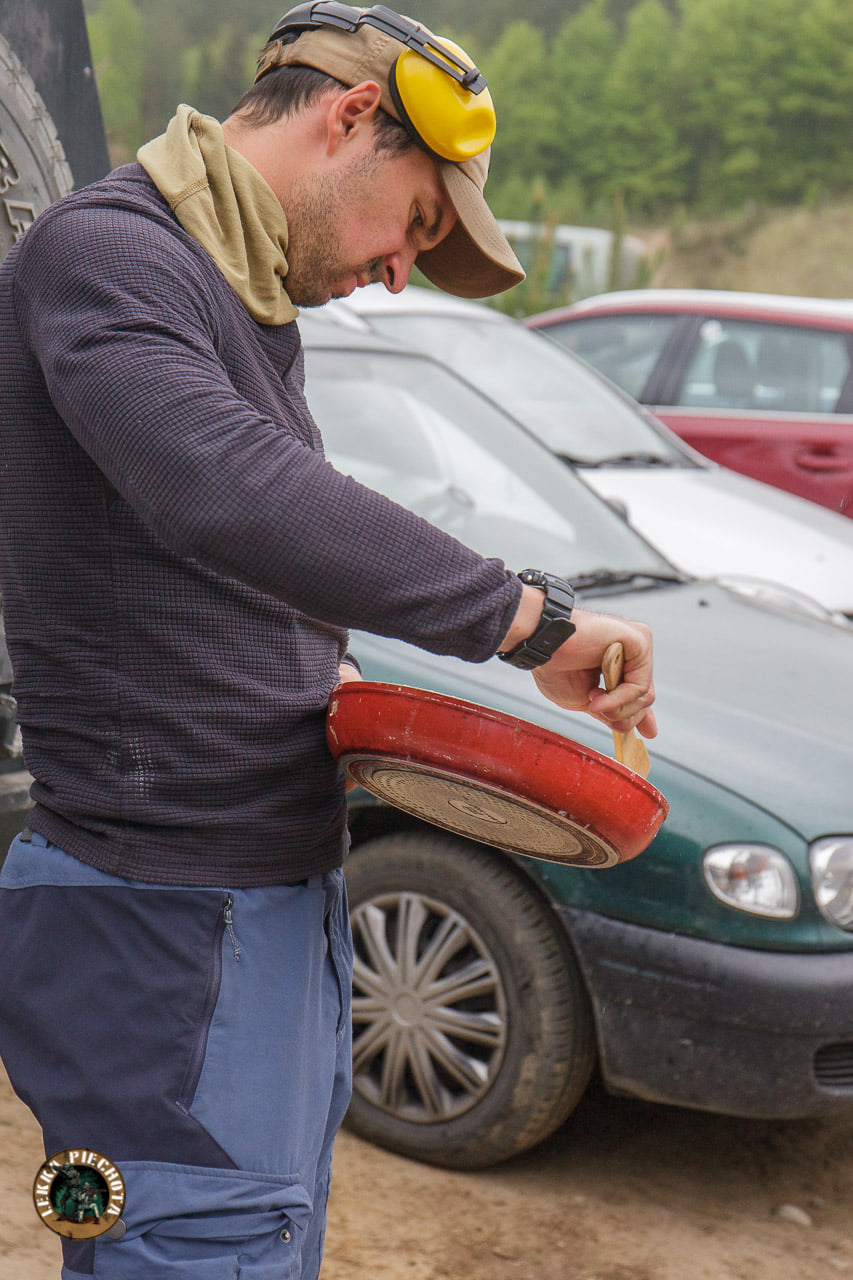
I like to go back to a certain photo from the very first “Lighter Infantry” edition: a few competitors getting soaked in the rain under a container, the shooting range drowning in mud, and Skura rinsing a pot in a giant puddle in the middle of the yard – raw and poor, that picture said it all. Now, barely a year and a half later, the situation looks completely different: three containers, two of them with properly built climbing walls, two stations for fast rope descents, way more shooting lanes, a kill house, an underground tunnel course, shooting options up to 350 m and 250 m, trackers for every team, an ambulance with medical support, tons of steel targets, efficient radio communication. And over 100 competitors! Shocking progress.
2.
There was still no catering – and that’s a good thing. Every team had to prepare their own food (I carried too much; the first time I ate something proper – pâté and freeze-dried food heated up – was 15 hours after the start). I appreciated that my buddy brought a stove, because a hot meal before the night task and tea at dawn really helped morale (as Napoleon said: an army marches on its stomach).
3.
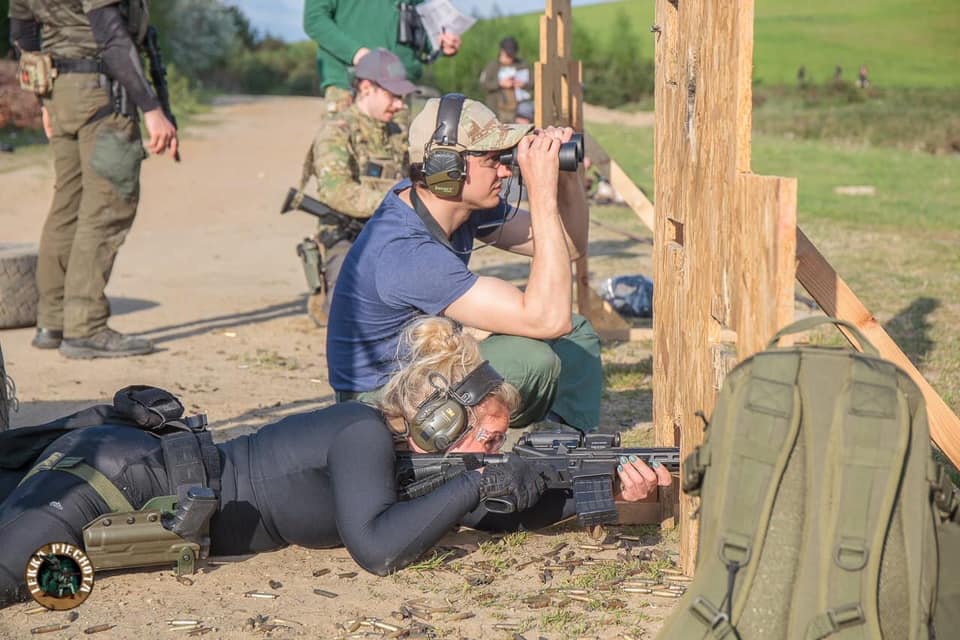
In total there were 28 shooting stages, divided into three 30-minute shooting windows on Saturday plus one at night, and a morning one with a more generous time limit – two hours. Here you could see the organizer’s growing experience: almost all stages were well thought out, with well-chosen targets. Few tasks felt pointless due to poor cost-benefit (like the hurdles – almost no team attempted them), or dumb ammo dumping (just the morning silhouettes). The only downside was the mass use of steel targets, which forced alternating fire between partners so the RO could verify hits – no blazing away like in IPSC.
4.
Hard to pick the best stage, but three stood out:
-
The climbing wall: climb up two containers, shoot six times at 110 m, then fast rope down. Climb was easy and doable without belay, but the organizer insisted on safety (good call).
-
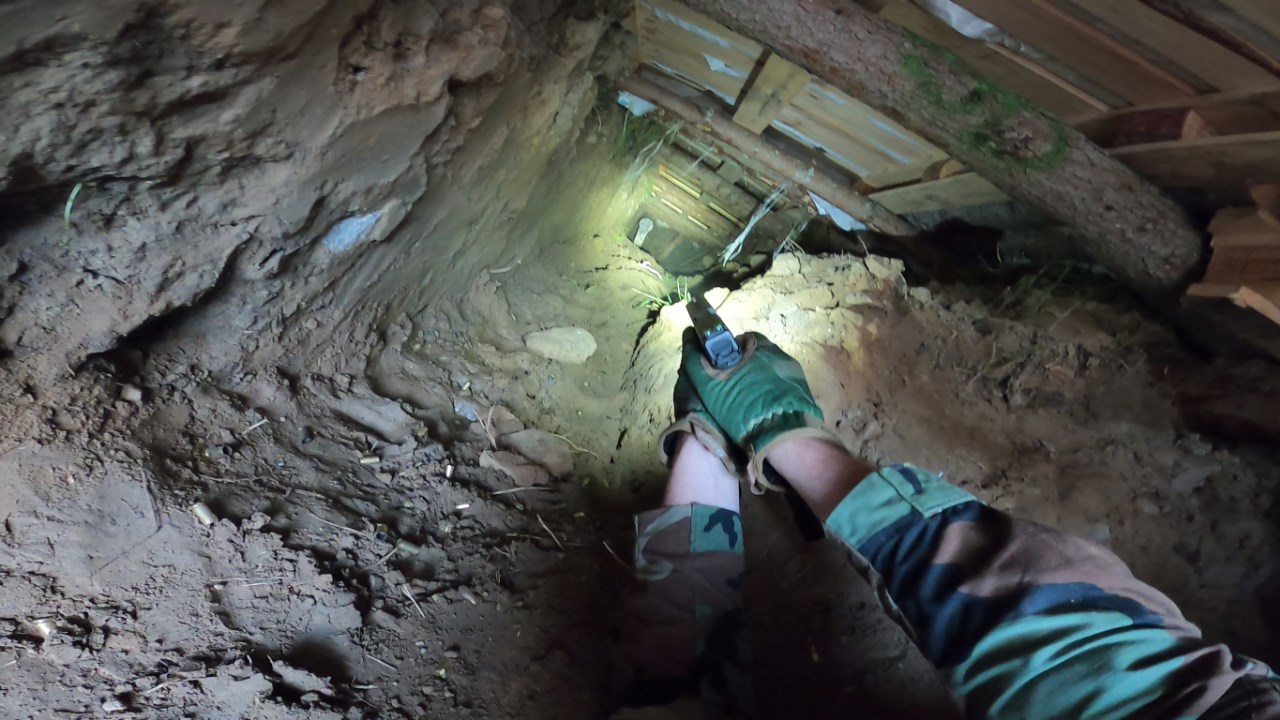
The tunnel (more of a trench really): a bit disappointing because light was only needed for deeply hidden targets, but still – it felt original, worthy of “Contra-tak” competitions or old-school Call of Duty.
-
The kill house: hyped on YouTube, and turned out both safe (thanks to modified rules and layout) and sensible. This was my sixth competition kill house, and usually they’re mediocre: weekend warriors creep around unnecessarily, while sporty types just sprint target to target, killing the vibe. Here, the size and complexity of the building forced slower movement, steel targets at short range encouraged cover use. Great by day, even better at night. Big props to KSI for building it and tweaking the rules.
5.
Before the comp I had trained most at 100-300 m, so I was really looking forward to medium-distance shooting. There were four such stages – big plus for the organizers. Unfortunately, issues with my scope (uncertain zero) hurt me. By day, at 170 m I hit 2/3 (maybe 3, but targets were hard to read so the RO and I agreed to count the last as a miss), and at night at 100 m I went 3/3. At 250 m and 350 m I only managed the largest silhouettes, but my buddy nailed everything at 250. So overall, as a team it was okay but below expectations. Still, the training paid off – we knew what to expect, just lacked more trigger time.
6.
I’d rate our shooting at about 70% (though final results showed we were second-best shooters, just behind veterans like Górniak and Mieciu). Out of 14 day stages, we missed one completely and had five misses total (with varying penalties depending on stage). We could have gone clean, but forgot masks during one window, forcing us to repeat almost an entire stage – costing time and ammo. Big plus: we had a fantastic RO (same as June last year), who knew we were pushing and ran around with us like crazy (cheers!).
At night, things went worse: out of nine stages, we didn’t shoot three. We were late to the window, so lost time and points – stages themselves were simple (apart from the wobbly bridge). Strangely, both day and night, the simple ORT stage generated most of our misses – even though we weren’t rushing. Morning had five stages: two long-distance (250, 350) and three fatigue tests. I especially liked the math one: tested focus and ability to hit precisely at 7 m right after shooting at 350 m.
7.
We stayed within the organizer’s minimum ammo limit (450 rounds), though sometimes it got tight (finished the night kill house with five empty mags and one round in the sixth!). On the march we carried 6 rifle mags and 3 pistol mags – more than required, but it saved us when we were late to windows and had to start shooting straight off the march (great realism test).
8.
The organizer provided a 10L locker at base – small but enough for ammo and water/food. For many, it was a social hub, but we barely used it – too busy marching. The only memory I have is lying down for a moment on a huge trash bag to change socks, while Olek laughed that with my missing tooth I looked like a real hobo. Sharing this, because these little moments also create the atmosphere.
9.
Speaking of socks – we finally did it right this time: changed them regularly, which kept our feet in good shape. I also used talc, no major issues. My Aku Pilgrim Combat boots worked great: stiffer than my Garmonts, so ankles survived the forested hills. Of course they got soaked multiple times in wet fields, but dried fairly quickly (thanks to modifications Aku made for the British Army), and dry socks restored comfort. In the end, I lost one toenail – but ironically due to slightly too-small sneakers I wore for wet stages and night tasks. My fault for not testing them earlier.
10.
We had feared the wet stages, so prepped clothes for soaking/drying. Luckily, weather dried up the bog, and the tunnel wasn’t flooded – so we stayed in uniforms.
11.
Gear: my trusty battered WZ 2010 uniform did the job again. Light, flexible, with good side pockets, and fast drying. Plus elbow/knee pad slots – very important. Wore it with short-sleeve thermal shirt, thermal boxers, and quality socks. Many overdress in the morning, then overheat. But carrying 25 kg and marching fast, even at 5°C in March, this setup works. Keep warmer layers in reserve for stops, but march light.
12.
Why didn’t we come earlier to shooting windows to prep? Simple: we wanted to hit all 30 navigation points before 23:00. And we did (with one big adventure). We’d also done it in previous editions – the only team to do so. This became our team’s personal challenge. For me it was pure motivation: keep moving no matter what. That meant no downtime at base. We pushed to meet each nav window plan. The plan was tight, so once we were 10 min late to shooting. But we succeeded, thanks to my buddy’s navigation skills – he was in top form this edition. Many teams boast about kilometers covered; for us, success means completing tasks while keeping distance minimal.
14.
A special mention for one nav point: unlucky number 13. End of our route, we were exhausted. Point was by a river, should have been quick. But no marker. We searched the bank, nothing. After 20 min I stripped to just my jacket, swam across (cold evening, freezing water), searched the other side in just underwear – still nothing. We were obsessed with finding all points, and it punished us. We sat there for an hour, lost all our buffer time, nearly missed the 23:00 cutoff. Spirits dropped hard. The only plus: cold water refreshed my legs. We then rushed like mad, hit the last points, and sprinted through forest at night, at max speed we could manage. Still arrived 5 min late to shooting – effects already described. Later, we learned the marker had been moved 50 m north of the designated spot. We got the point credited, but lost ~360 minutes overall. Huge penalty. Lesson learned: never assign 13 to a nav point.
15.
Now, the night special task: carrying paving blocks. Reality crushed the organizer’s vision – out of 20 teams, 18 skipped it. We debated long, but rejected the “crossing a patrolled border” variant as pointless risk. Others did the same. Shame they also skipped the block-carrying, because for me it was unforgettable. Distance: only 3.5 km. Rules: change into sports clothes (no camo, no gear, no rifle), plus mandatory mustache. Carry 3.5 kg paving blocks. Before the comp, buddy even checked block shapes/weights on nearby construction sites. I chose my new Eberlestock F1 Mainframe pack partly for this task. Plan: do two trips, but at the comp we changed – one heavy trip together. My pack could fit 30 blocks, but we loaded 10 (plus rifle = 40 kg). Buddy carried it, I had 7 blocks in a Wisport Zipperfox 40 (29 kg). Problem: rifle stock plus blocks pressed into my spine, forcing me to hunch over. By the end, my hips burned, I shuffled tiny steps. But we laughed through it, carried all 60 kg. Returning, we agreed to skip the second trip – too much. Only Forest Rats also carried their quota. Then we got some rest before morning shooting.
16.
Endurance: we both made it to morning in surprisingly good shape. I had no major crises, though less leg power than last year. Only near the end, after five steep climbs, my heart started hurting – I feared I’d have to quit. Luckily, breaks helped. Buddy had a thigh crisis halfway, barely moving uphill. Thought it was over – but then, miracle: he finally listened to me and used trekking poles. Total game changer – he finished the comp with DIY pine-branch poles. Lesson: don’t be stubborn like my buddy.
17.
New boots, new pack, new rifle with suppressor – lots to prep. Everything worked, no failures. For next edition only small tweaks needed.
18.
And finally, philosophically: organizers put heart into these comps. Each edition brings something new, pushing us shooters to train harder and refine gear. I strongly encourage you to try – whether “Lighter” or “Light Infantry”. The experience is priceless. You can treat it casually, like our buddy who read the rules two days before. We can’t – we overanalyze, plan every detail, which burns us out mentally. For the first time, my buddy said prep killed his joy in shooting. I too was stressed nonstop. Another lesson: build more distance, don’t let comps get into your head so much. And that’s why I love “Light Infantry” – it goes beyond a standard competition. If, of course, you put your heart into it.